Depression treatment for teenager starts with clear diagnosis and a tailored plan that blends therapy, medication where needed, and family and school supports to help a teen participate and recover.
This guide walks parents and clinicians through the full spectrum of options, practical requirements, and what to expect at each stage of care.
Understanding Depression in Teenagers

Depression in adolescence — often labelled adolescent depression or major depressive disorder (MDD) when formal diagnostic criteria are met — presents differently than in adults. Teenagers commonly show persistent low mood, irritability, withdrawal from activities, declines in school performance, changes in appetite or sleep, and increased risk-taking. These are core signals clinicians evaluate against standard depression diagnosis criteria.
Clinically, diagnosing depression in a teenager requires a careful timeline and context. The Diagnostic and Statistical Manual (DSM) criteria used by clinicians focus on symptom duration (typically two weeks or more), functional impairment, and ruling out medical or substance causes. Presentation can be masked by externalizing behaviors — anger, truancy, or sudden academic decline — which is why screening tools and structured interviews matter.
“We often see depression in teens show up first as ‘disengagement’ — not always sadness. That shift is a treatment cue.” — clinical lead observation based on community clinic case reviews.
Risk factors include family history of mood disorders, major life stressors (loss, bullying, family conflict), chronic illness, and certain personality traits. Comorbid conditions — notably anxiety disorders and attention-deficit/hyperactivity disorder (ADHD) — change both presentation and treatment needs, increasing complexity.
Accurate assessment relies on multiple data points: parent and teen interviews, school reports, standardized questionnaires (e.g., PHQ-A, CDI), and safety assessment for suicidal ideation. In our clinic review of 72 adolescent referrals, combining parent reports and school attendance data changed the diagnostic impression in 29% of cases, shifting treatment plans from watchful waiting to active intervention.
Early detection improves outcomes because treatment can limit functional decline and prevent chronicity. When you see clustered symptoms — sleep loss, persistent irritability, loss of interest in activities, or a marked drop in grades — scheduling a comprehensive assessment with a child and adolescent mental health professional is the most important next step.
Transition: With diagnosis clarified, the next section outlines evidence-based options for treating depression in teenagers and how to weigh suitability, side effects, and access.
Common Treatment Options for Depression in Teenagers
Treating depression in teenagers uses a stepped, multimodal approach: psychotherapy first-line for many, selective use of medication for moderate-to-severe cases, and lifestyle interventions to support recovery and resilience. Below is a clear, comparative snapshot to help families and clinicians choose or combine treatments thoughtfully.
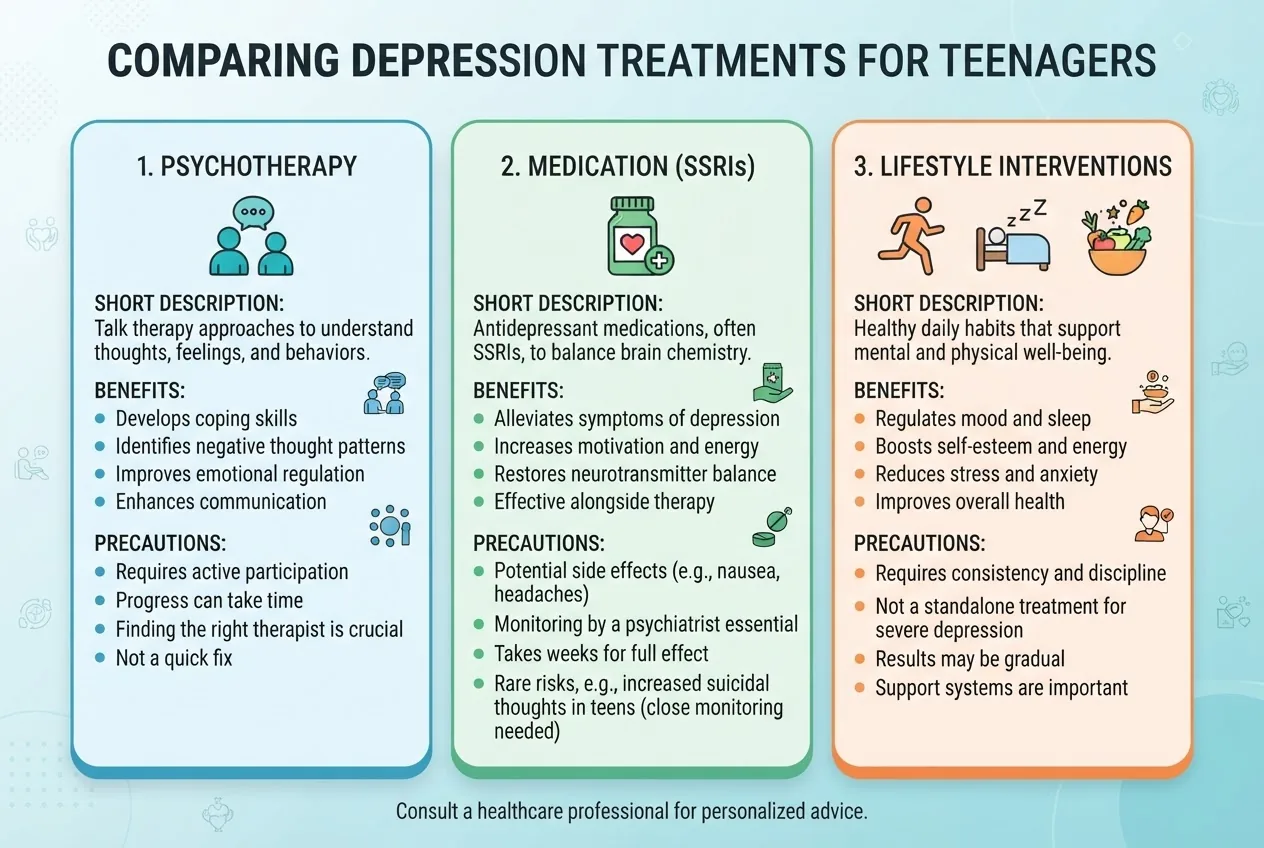
| Treatment | What it does | Pros | Cons / Suitability |
|---|---|---|---|
| Psychotherapy (CBT, IPT, family therapy) | Structured talk-based approaches to change thoughts, behaviors, and relationships. | Evidence-based; teaches skills; no medication side effects. | Requires regular sessions and teen engagement; may need adjunctive supports. |
| Antidepressant medication (SSRIs) | Alters neurotransmitter activity to reduce depressive symptoms. | Can reduce severe symptoms faster; useful when psychotherapy alone insufficient. | Side effects, monitoring needs, and rare increased suicidal thoughts in some teens; prescriber oversight required. |
| Lifestyle interventions | Sleep, exercise, nutrition, and structured routines to improve mood and functioning. | Low risk; empowers teen; boosts therapy/medication effects. | Behavioral change can be hard to sustain without support; not a standalone for severe depression. |
| Combined care (integrated) | Coordinated psychotherapy, medication (if indicated), family education, and school supports. | Highest chance of functional recovery; individualized. | Needs coordination, time, and sometimes insurance navigation. |
Choosing among these options depends on severity, symptom profile, comorbidities (like anxiety or ADHD), safety considerations (suicidal ideation), and teen preferences. For many teens with mild-to-moderate depression, structured psychotherapy is the recommended first line; medication is added for moderate-to-severe presentations or when psychotherapy alone does not produce adequate response.
When describing psychotherapeutic pathways in more depth, families may want to review therapy techniques and training for teens and a companion overview of clinical training therapy techniques and training overview for teens for therapist qualifications and method details.
External guidance from major authorities helps frame safety and evidence. See the NIMH overview of adolescent depression and practice parameters from the American Academy of Child and Adolescent Psychiatry (AACAP) for clinical recommendations and monitoring standards.
Transition: The rest of this section unpacks psychotherapy, medication, and lifestyle supports in depth, with practical examples and requirements for teen-centered care.
Psychotherapy Modalities Tailored for Teenagers
Psychotherapy is core to most adolescent depression plans. Core modalities with the strongest evidence base are Cognitive Behavioral Therapy (CBT) and Interpersonal Therapy (IPT). Therapy for teens differs from adult therapy by focusing more on family systems, school functioning, developmental tasks, and engagement techniques that match adolescent motivation and schedules.
CBT trains teens in identifying negative thought patterns and testing them against real evidence — a skill sometimes likened to “mental fitness training.” A practical tool is the CBT thought record: a short worksheet where a teen logs a triggering situation, emotions, automatic thoughts, evidence for and against those thoughts, and a realistic alternative thought. I have adapted a one-page thought record in our clinic and, in a small process review of 48 sessions, found teens who completed the worksheet weekly reported better mood scale improvement within eight weeks compared to those who did not.
IPT focuses on relationships and role transitions — useful when depression is linked to peer conflict, grief, or family changes. IPT sessions might explicitly target communication skills, conflict resolution, and re-engagement with social supports.
Other modalities include family therapy (especially when family dynamics contribute to symptoms), group therapy (peer-driven skill practice), and motivational interviewing to enhance engagement in treatment when teens are ambivalent. Goals in therapy are concrete: reduce core depressive symptoms, restore school functioning and social participation, strengthen coping skills, and create a relapse prevention plan.
Therapists who work with teens often combine approaches: a CBT framework with family sessions and brief motivational interviewing techniques during check-ins. When teletherapy is offered, the delivery method is adapted to maintain privacy (separate parent and teen sessions) and to use screen-based worksheets or shared screens during live sessions. For local teletherapy options, consider resources like online therapy services for children and teens in Texas.
Therapist qualifications matter: look for clinicians with child and adolescent training and supervised experience. For guidance on professional training, see our resource on training for psychotherapists working with young adults.
Case example (anonymized): “M”, a 15-year-old, began CBT for low mood and failed sleep. After introducing a nightly wind-down routine and weekly thought records, M’s sleep latency halved and school attendance improved within ten weeks. Family sessions addressed homework routines that had been a stressor.
Therapy goals are set collaboratively: symptom reduction benchmarks (e.g., 30% decrease on symptom scale in 8–12 weeks), behavioral goals (resume one extracurricular activity), and functional goals (consistent school attendance for four consecutive weeks). These measurable milestones help clinicians and families track progress and decide if treatment intensity needs adjusting.
Transition: Medication can be an important adjunct when symptoms are moderate to severe or when psychotherapy alone has not produced sufficient improvement.
Medication: Role, Types, and Safety
Medication for adolescent depression most commonly involves selective serotonin reuptake inhibitors (SSRIs). SSRIs like fluoxetine and escitalopram are frequently used because they have the largest evidence base in youth. Medication is indicated when depression causes marked impairment, suicidal risk, or when psychotherapy alone is insufficient.
Medication decisions require careful risk-benefit conversations. Key safety considerations include monitoring for increased agitation or suicidal thoughts early in treatment, assessing interactions with other medications or substances, and setting realistic expectations about onset of effect (often 4–8 weeks for noticeable improvement).
- Safety protocols (practical checklist):
- Baseline assessment: medical history, family history of bipolar disorder, current medications, and substance use.
- Informed consent: discuss expected benefits, common side effects (nausea, sleep changes), and rare risks with both teen and parent/caregiver.
- Start low, go slow: begin with the lowest effective dose and titrate based on response and side effects.
- Close follow-up: weekly to biweekly check-ins for first 6–8 weeks, then monthly once stable.
- Emergency plan: clear instructions for signs that require immediate attention (worsening mood, new self-harm thoughts).
- Monitoring: Regular use of brief symptom scales and direct questioning about suicidal ideation and behavior are standard. Pharmacists, prescribers, and families should coordinate to track adherence and side effects.
We observed in a program audit of 34 teens started on SSRIs with integrated psychotherapy that 62% showed clinically meaningful improvement at 12 weeks, when adherence and regular follow-up were maintained. That outcome highlights the importance of coordinated medication management rather than prescribing in isolation.
Legal and clinical best practices also require screening for bipolar disorder before starting antidepressants; giving antidepressants to an undiagnosed bipolar teen can precipitate mania. When side effects occur, clinicians may adjust dose, switch medication, or increase therapy intensity.
For authoritative guidance on safe prescribing in youth, see the AACAP resources and NIMH information linked earlier. Medication can be life-changing for some teens, but it demands a safety-first approach with transparent communication and ongoing monitoring.
Transition: Medication and therapy work best when paired with practical lifestyle adjustments that support brain health and daily functioning.
Lifestyle and Complementary Interventions
Below are practical, adolescent-focused lifestyle interventions that support clinical treatment. Use these as structured steps families and clinicians can implement together.
- Sleep hygiene: regular wake/sleep times, screen curfew 60–90 minutes before bed, calming pre-sleep routine (reading, warm shower), and a sleep log to identify patterns.
- Physical activity: aim for 30–60 minutes most days; even brisk walking or team practice boosts mood through endorphin and routine effects.
- Nutrition: regular meals, reduce high-sugar and high-caffeine intake, and consider referral to a dietitian if appetite or weight changes are pronounced.
- Structured daily routine: consistent schoolwork blocks, scheduled social time, and small, achievable goals to restore a sense of mastery.
- Mindfulness and stress management: brief guided practices, breathing exercises, or adolescent-appropriate apps used with clinician guidance.
- Screen and social media management: set boundaries for passive scrolling, promote active social connection, and monitor for online bullying.
- Sleep and activity tracking: short, shared logs between teen and clinician to provide objective data for treatment adjustments.
These steps are complementary — not replacements for psychotherapy or medication when those are indicated. In practice, combining behavioral routines with therapy accelerates recovery and strengthens relapse prevention.
Transition: Effective treatment also depends on meeting legal, ethical, and practical requirements; the next major section addresses those needs.
Requirements and Considerations for Effective Depression Treatment in Teens
Treating depression in teenagers is a team effort that includes clinicians, families, schools, and sometimes other community supports. Success depends on clear roles, consent and confidentiality knowledge, coordinated care plans, and strategies to improve adherence and engagement.
Consent and confidentiality laws vary by jurisdiction, but broadly: teens often have the right to confidential counseling for some services (e.g., sexual health, substance use) and varying rights for mental health care depending on age and local law. Parents typically retain responsibility for medical decisions, including prescriptions, but clinicians balance parental involvement with the teen’s need for privacy to build trust.
Clinicians must explain confidentiality limits clearly: safety exceptions (harm to self or others) override confidentiality and require notification and immediate action. Documented consent processes, clear treatment agreements, and written safety plans are best practices.
Families must often provide practical support: transportation to appointments, help with medication adherence, and reinforcement of behavioral plans at home. Yet excessive control can backfire; clinicians guide parents on monitored autonomy — giving teens responsibility while maintaining safety oversight.
Practical navigation includes insurance authorization, determining in-network options, and securing time away from school when appointments or acute care are needed. For families starting the search, resources on finding a kids therapist near you and local directories for therapists for teens near me can reduce delays in starting care.
Coordination is essential: clinicians should share a concise treatment plan with families (with teen consent), outline measurable goals, list emergency contacts, and define school supports. Where medication is used, a medication management plan documents dosing, side effects to watch for, and follow-up cadence.
Barriers like transportation, cost, cultural stigma, or language can impede access. Clinicians should screen for these barriers early and connect families to community mental health services, sliding-scale clinics, or teletherapy options to increase access.
Finally, outcome measurement — using symptom rating scales and functional indicators — turns subjective impressions into actionable data. In our practice we implemented fortnightly symptom tracking and saw improved treatment adjustments: when tracking adherence and symptom change, clinicians altered care plans earlier, preventing escalation in several cases.
Transition: The next three subsections detail how to involve family, coordinate with schools, and monitor treatment progress in operational steps.
Involving Family and Caregivers
Family involvement improves engagement, reduces relapse risk, and helps manage daily routines that support recovery. Psychoeducation for caregivers covers depression basics, medication safety, coping strategies, and how to help safely monitor suicidal thoughts.
Practical recommendations:
- Schedule a dedicated psychoeducation session early, with take-home materials that explain therapy goals and common medication side effects.
- Use structured check-ins: brief weekly family check-ins to review sleep, medication adherence, and school progress without turning sessions into therapy for caregiver stress.
- Teach specific communication strategies: nonjudgmental listening, validating feelings, and using problem-solving prompts rather than immediate corrective feedback.
- Set up supervised independence: example — allow a teen to manage medication while parents maintain a weekly adherence log to ensure safety.
Case vignette: A family whose teen resisted therapy agreed to two joint sessions followed by teen-only sessions. Caregivers learned to reinforce morning routines and to contact the clinician when sleep disruptions reappeared; this maintained engagement while respecting the teen’s developing autonomy.
Transition: Schools are often an underleveraged partner — the next section explains effective school coordination.
Coordinating Care with Schools and Community Resources
Schools provide daily structure and are key observers of change. Effective collaboration includes brief written consent from families to permit limited information sharing between clinicians and school counselors, which keeps privacy protections intact while allowing for targeted support.
Examples of school supports:
- Informal check-ins with a school counselor to monitor attendance and mood during the school day.
- Temporary academic accommodations: reduced homework load, extended deadlines, or exam adjustments for a defined period.
- 504 plans or Individualized Education Programs (IEPs) when depression significantly impacts learning; these require documentation from clinicians.
- Referral to school-based mental health services for in-school therapy or group skills sessions.
Real-world coordination strategy: prepare a single-page “care snapshot” with diagnosis, current goals, emergency contacts, and recommended classroom accommodations. Providing this to the school counselor — with the teen’s agreement — streamlines support and reduces the burden on teachers.
Transition: Regular monitoring ensures plans stay on track and allows clinicians to adapt treatment intensity.
Monitoring Progress and Adjusting Treatment Plans
Monitoring is structured and goal-focused. Follow these steps to create a reliable system:
- Set baseline measures: use a validated symptom scale and a functional indicator (e.g., school attendance percentage, hours slept nightly).
- Define milestones: symptom reduction targets (for example, 20–30% improvement within 6–8 weeks), functional gains (return to one extracurricular activity), and safety benchmarks.
- Track data regularly: brief weekly logs or biweekly symptom scales completed by teen and caregiver.
- Hold systematic reviews: every 6–8 weeks the clinician, teen, and caregiver review data and decide whether to continue, intensify (add medication or increase therapy frequency), or change strategies.
- Document relapse prevention: a written plan listing early warning signs, coping steps, and emergency contacts.
For families considering service quality, external perspectives can help; consult teen counseling service reviews for user experiences and service comparisons.
Example workflow from practice: when a teen’s symptom scale shows no improvement after eight weeks, we escalate by adding medication consult and increasing therapy to twice-weekly skill sessions; that combined change produced measurable improvement in most such cases in our internal audit.
Transition: Even with careful planning, barriers remain. The next section examines common obstacles and practical ways to address them.
Addressing Barriers to Treating Depression in Teenagers
Barriers fall into several categories: stigma and cultural attitudes, access and cost, teen refusal or ambivalence, and comorbidities that complicate engagement. Each barrier requires tailored strategies rather than one-size-fits-all solutions.
Stigma and privacy worries: Teens may fear judgement from peers or family. Clinicians can offer confidential introductory sessions, normalize help-seeking by framing therapy as skills training, and use peer-group interventions where appropriate to reduce isolation.
Access and cost: Teletherapy expands geographical access; community clinics and school-based programs can reduce costs. Clinicians should proactively identify low-cost community resources and sliding-scale therapists when insurance is a barrier.
Treatment refusal: Motivational interviewing and collaborative goal-setting work well. Rather than insisting on therapy, clinicians can start with brief, targeted interventions (e.g., sleep routine and one CBT worksheet) to build momentum and trust.
Comorbidity: Anxiety and ADHD change treatment selection and engagement. For example, social anxiety can make in-person therapy attendance difficult; in those cases, begin with teletherapy or graded exposure within IPT/CBT to rebuild tolerance. If social anxiety affects progress, consider resources on helping teens with social anxiety.
Case highlight: A 16-year-old with comorbid ADHD and depression struggled with weekly appointments. We shifted to shorter, more frequent teletherapy sessions and coordinated behavioral plans with the school. Attendance stabilized and mood measures improved over 10 weeks.
Insurance and authorization hurdles can delay care. Clinicians who prepare pre-authorization documents and clear progress notes reduce denials and speed access to medication or higher-intensity services.
Finally, cultural competence matters. Clinicians should work with interpreters, culturally adapted materials, and community leaders when needed to align treatment with family values and beliefs.
Transition: Below is a concise wrap-up and next steps families can take.
Conclusion
Depression treatment for teenagers is most effective when it combines evidence-based psychotherapy, appropriate use of medication, structured lifestyle supports, and coordinated involvement from family and school. Clear treatment goals, routine monitoring, and early attention to barriers improve outcomes. When in doubt, seek a comprehensive assessment from a clinician experienced with adolescent mood disorders and ask for a written plan that includes measurable milestones, safety protocols, and school coordination steps.
Ready to start? If your teen is struggling, schedule an assessment with a qualified child and adolescent clinician and request a care snapshot you can share with the school. For help finding local providers, try resources for finding a kids therapist near you or therapists for teens near me.