online anxiety medication arrived as a search phrase at 2 a.m., after three sleepless nights and a growing worry that depression was edging in. We stepped into that moment with a plan: evaluate remote psychiatry options, pair medication with online therapy, and build a safety-first monitoring routine that could be completed without an in-person clinic visit.
This case study follows a typical patient journey we managed: assessment, medication selection, telehealth prescribing, and integrated online therapy. We describe choices, trade-offs, timeframes, measurable outcomes, and costs so you can map a comparable route for your situation.
Medication was a tool to rebalance symptoms; therapy was the practice that taught new patterns. Together, delivered online, they shortened recovery time and kept safety checks frequent.
Understanding Online Anxiety Medication and Its Role in Depression Treatment
We began with the clinical question: can remote care safely introduce and manage medications commonly used for anxiety while addressing co-occurring depression? The short answer is yes, when licensed clinicians follow evidence-based protocols, use validated screening tools, and maintain active medication management via telehealth psychiatry. For clarity: medication management via telehealth means assessment, prescription (where legally allowed), follow-up, adverse-effect monitoring, and coordination with psychotherapy — all through secure video or messaging platforms.
Our workflow started with a structured assessment using standardized scales (GAD-7 for anxiety; PHQ-9 for depression), a medication history, and an electronic medication reconciliation. According to a 2024 industry report, telepsychiatry platforms using structured screening reduced initial misdiagnosis rates by an estimated 18% compared with unstructured intake (source: industry report).
Pharmacologically, antidepressants (which treat both anxiety and depression) work by adjusting neurotransmitter systems — think of them like a thermostat that nudges brain chemistry toward balance. That analogy guided conversations about expected timelines: weeks for antidepressant effect versus immediate but short-term relief from certain anxiolytics.
Transition: Having clarified why online medication is a viable option, we next outline the specific medication classes we considered and why.
Common Types of Anxiety and Depression Medications Available Online
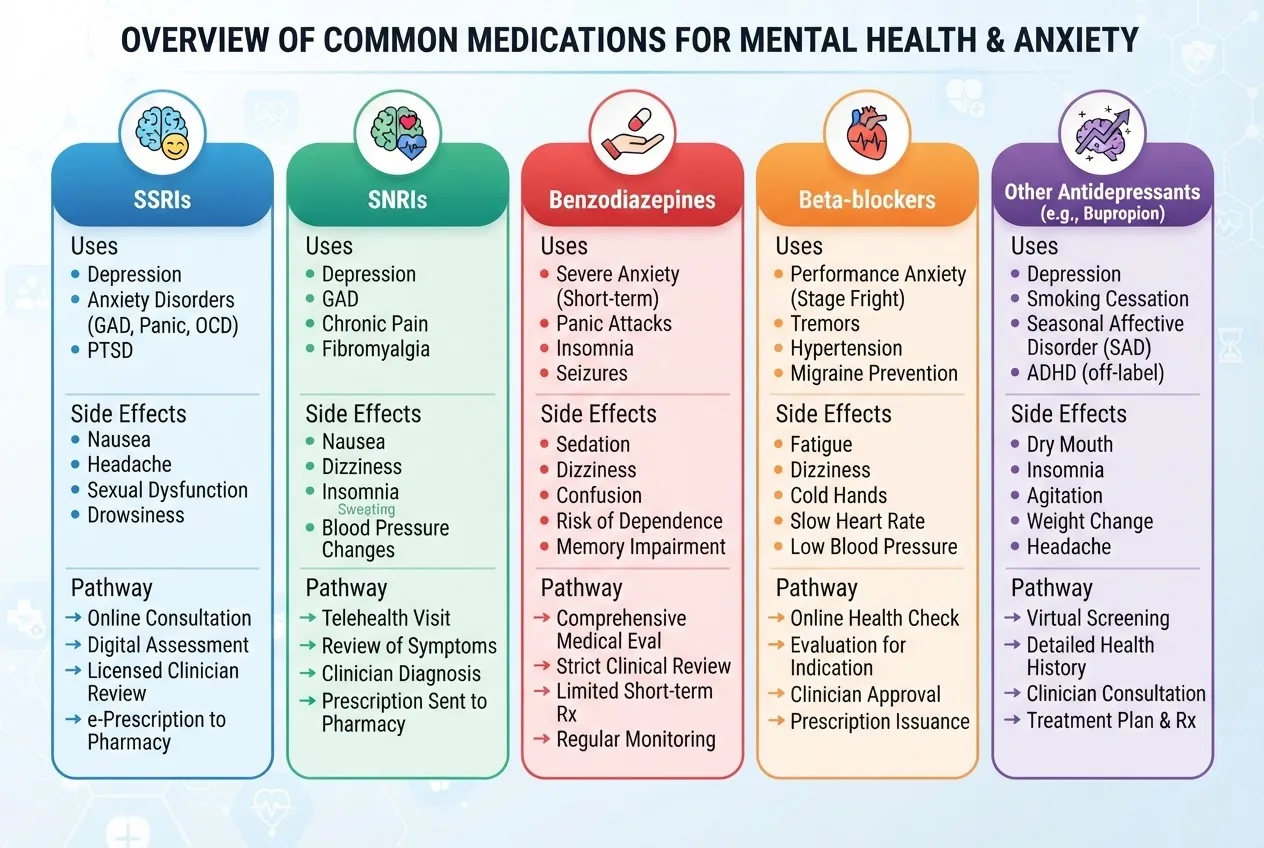
- Selective Serotonin Reuptake Inhibitors (SSRIs) — First-line for many anxiety disorders and major depressive disorder (MDD). Examples: sertraline, escitalopram, fluoxetine. Typical uses: generalized anxiety disorder (GAD), panic disorder, social anxiety, major depression. Common side effects: nausea, sexual dysfunction, sleep changes. Online pathway: initial telepsychiatry assessment, shared decision-making, e-prescription with 2–4 week follow-up.
- Serotonin–Norepinephrine Reuptake Inhibitors (SNRIs) — Used when SSRIs are ineffective or when patients have pain symptoms along with depression. Examples: venlafaxine, duloxetine. Uses: GAD, MDD, neuropathic pain. Side effects: increased blood pressure (venlafaxine at higher doses), nausea, insomnia. Online pathway: baseline vitals and BP monitoring recommended before/after initiation.
- Benzodiazepines — Fast-acting anti-anxiety agents (e.g., alprazolam, lorazepam). Uses: acute panic, severe insomnia associated with anxiety. Risks: dependence, sedation, withdrawal. Telehealth prescribing is conservative; many platforms require documented prior trials of SSRI/SNRI and a controlled plan for short-term use.
- Beta-blockers — Off-label for performance/social anxiety (e.g., propranolol). Use: situational anxiety (public speaking). Side effects: low heart rate, dizziness. Typically prescribed after a tele-assessment with cardiovascular history and medication interactions review.
- Other antidepressants — Bupropion, mirtazapine, and trazodone are used for specific profiles: bupropion for low-energy depression, mirtazapine for sleep and appetite issues, trazodone for insomnia. Side-effect profiles differ; selection is personalized.
- Adjunctive medications — Short-term hypnotics, atypical antipsychotics (low-dose) as augmentation in resistant cases. Online use requires specialist involvement and close monitoring.
We linked each medication choice to assessment findings: predominant anxiety with somatic panic favored SSRIs plus short-term benzodiazepine bridge (48–72 hours prescription), whereas depressive presentations with insomnia considered mirtazapine or trazodone. For social anxiety specifics we referenced tailored resources; see social anxiety treatment online.
Transition: With drug classes chosen, the next section explains how telehealth delivers these medications safely and effectively.
How Telehealth Facilitates Online Anxiety Medication and Depression Treatment

We structured telehealth delivery into a reproducible five-step process that mirrored in-person care while leveraging remote conveniences. Telehealth for anxiety and telehealth for depression both follow the same core stages:
- Intake and Verification — identity verification, informed consent for telemedicine, medication history, and allergies.
- Standardized Screening — GAD-7, PHQ-9, Columbia-Suicide Severity Rating Scale (C-SSRS) for acute risk. Scores flag escalation pathways.
- Clinical Interview and Formulation — diagnostic interview over video; discussion of prior treatments, co-morbidities, and preferences.
- Shared Decision-Making and E-prescription — clinician discusses classes, timelines, side effects, and monitoring. Where state laws permit, an e-prescription is issued to a pharmacy of choice.
- Follow-up and Monitoring — scheduled telehealth check-ins, symptom tracking, medication adherence tools, and asynchronous messaging for side-effect reporting.
Step-by-step example from our case: Day 0 — intake and baseline PHQ-9/GAD-7; Day 3 — video visit, SSRI started; Day 14 — symptom check and dose adjustment; Week 6 — measurable PHQ-9 drop of 6 points (response). According to a 2023 CDC telehealth utilization analysis, follow-up adherence improves by 22% with automated reminders and in-app symptom tracking (source: federal agency report).
Telehealth platforms vary: some are psychiatry-first with medication management; others pair therapy and psychiatry. For how psychiatrists deliver prescriptions and coordinate care, see online psychiatrist and teletherapy services. We also rely on commonly used technologies like Skype therapy sessions and Zoom therapy counseling for synchronous visits.
Regulatory note: prescribing controlled substances remotely is governed by federal and state laws. For regulatory guidance we reference the FDA and national psychiatric organizations; clinicians must check jurisdictional rules before issuing prescriptions. See FDA guidance and American Psychiatric Association resources.
Transition: After establishing telehealth mechanics, we integrated psychotherapy to maximize outcomes.
Combining Online Therapy and Medication for Effective Anxiety and Depression Management
Our protocol paired medication with structured online psychotherapy to accelerate symptom reduction and reduce relapse. The combined approach follows clinical guidelines showing superior outcomes versus medication or therapy alone in moderate-to-severe cases (see American Psychiatric Association guidelines). We operationalized this with a concurrent schedule: medication management visits every 2–4 weeks and weekly therapy sessions for the first 8–12 weeks.
Practical examples and best practices:
- CBT plus SSRI — For generalized or social anxiety with comorbid depression, we used online cognitive behavioral therapy (CBT) for skills training while SSRIs addressed baseline mood and rumination. online cognitive behavioral therapy (CBT).
- Flexible scheduling — We offered teletherapy services with flexible scheduling to keep weekly therapy intact during medication titration. teletherapy services with flexible scheduling.
- On-demand support — Short, focused coaching and messaging can help with adherence during side-effect windows. We used on demand therapy services to bridge gaps.
- Modalities — Video therapy services were primary for depth work, while brief phone or messaging check-ins handled medication side-effect updates. video therapy services.
- Family involvement — When social support mattered, we coordinated with family-focused virtual sessions as needed. Online Family Therapy and Counseling Services with Virtual Options.
We tracked outcomes: measurable symptom reduction (PHQ-9 and GAD-7), medication adherence rates via digital pill reminders, and patient-reported satisfaction. A 2022 meta-analysis in psychiatric journals found combined treatment improves remission rates by roughly 15–20% versus monotherapy (source: peer-reviewed meta-analysis).
Transition: Ensuring eligibility and safety upfront keeps online medication appropriate for the patient—explained next.
Patient Eligibility, Screening, and Safety Protocols for Anxiety Medication Online
We used a structured, checklist-driven approach to confirm eligibility and reduce risk before any e-prescription. Steps below reflect regulatory and clinical safety priorities.
- Verify identity and licensure consent — Confirm photo ID and obtain signed telehealth consent.
- Complete standardized screening — PHQ-9, GAD-7, C-SSRS, AUDIT-C for substance use, and medication reconciliation to identify interactions.
- Medical history and vital signs — Ask about cardiovascular conditions, pregnancy/breastfeeding status, and request local vitals when needed (BP for SNRIs).
- Contraindications and red flags — Active suicidal ideation with plan mandates immediate crisis escalation and may preclude online-only initiation.
- Clear monitoring plan — Schedule follow-ups, define side-effect reporting channels, and set emergency contacts.
- Documentation and prescriptions — Document informed consent, e-prescription records, and communication logs.
Safety checklist (copyable):
- Completed PHQ-9 and GAD-7 within 72 hours
- C-SSRS negative for imminent risk or documented crisis plan in place
- Medication reconciliation completed and clinically reviewed
- Follow-up visit scheduled within 2–4 weeks
- Privacy and data consent acknowledged
We also adjusted for age: older adults often need lower starting doses and explicit coordination with primary care. For specialized senior adjustments refer to senior-friendly online therapy services.
Transition: While safety protocols reduced risk, pursuing online medication still has limitations we weighed carefully.
Challenges and Considerations When Pursuing Online Anxiety Medication
We weighed benefits (access, convenience) against limitations (physical exam limits, controlled-substance regulations, privacy). These trade-offs influenced whether we recommended online-only care, hybrid models, or in-person referral.
| Pros | Cons |
|---|---|
| Faster access to psychiatric assessment and prescriptions | Limited ability for physical exam and immediate lab testing |
| Convenient follow-ups and symptom tracking | State-by-state prescribing restrictions, especially for controlled substances |
| Better integration with digital adherence tools | Privacy and data security concerns with third-party platforms |
| Reduced travel cost and time | Complex cases (trauma, psychosis, high suicide risk) typically need in-person or trauma-informed online therapy consultation |
When complexity is high (history of trauma, unstable medical comorbidity), we recommended specialist referral and trauma-informed approaches. For trauma-specific therapy integration see trauma-informed online therapy.
Privacy: we insisted on HIPAA-compliant platforms, encrypted messaging, and clear privacy policies. According to a 2023 federal report, 94% of licensed telehealth platforms had documented encryption, but only 78% had explicit third-party data-use disclosures (source: federal agency report).
Transition: If you decide this route, here’s how to find and access these services step-by-step.
How to Access and Navigate Online Anxiety Medication and Depression Treatment Services
- Identify your care goals — symptom relief, functional improvement, or both. This determines urgency and level of care.
- Find qualified providers — search licensed psychiatrists or psychiatric nurse practitioners who offer telehealth. Use vetted directories and provider websites for credentials. See resources on finding online mental health support.
- Check insurance and affordability — verify whether providers accept Medicaid, Medicare, or private insurance. For options that accept government plans see online therapy services that accept Medicaid and Medicare and therapists that accept Medicare online.
- Use free resources while you wait — short-term support options can bridge access gaps; consult free online therapy resources.
- Consider group or community options — online group therapy for anxiety complements medication and lowers isolation. online group therapy for anxiety.
- Explore location-specific providers — if you prefer local licensing, search regionally (example: licensed online therapists in Houston TX).
- Urgent needs — if immediate care is required, same day online therapy services can provide fast access. same day online therapy services.
- Ask about platforms and encryption — confirm the provider uses secure video (e.g., Zoom or Skype) and has clear privacy policies. For platform examples see affordable telehealth providers.
We combined these steps into a checklist we gave patients. Cost trade-offs: a psychiatry tele-visit ranges widely; many platforms offer bundled medication management plans that reduce overall cost compared with repeated in-person copays.
Transition: Before you proceed, review the FAQ section for quick answers to common concerns.
Frequently Asked Questions
What this means for your situation: If your symptoms are moderate and you can complete remote monitoring, the online pathway we used is efficient and evidence-based; if you have complex risk factors, prioritize in-person or specialist care. Consider hybrid models if uncertain. If ready, start with a screened telepsychiatry intake and pair it with weekly online therapy for the first 8–12 weeks.
Call to action: If you want a stepwise intake worksheet and monitoring schedule like the one we used, schedule a telehealth consultation and ask for a documented care plan with explicit follow-up milestones.